Tina Müller · 15 October 2026
Quilby Residents Document Neighborhood Stories Through Oral History Project
Quilby residents have launched an oral history project that captures personal accounts from multiple neighborhoods and organizes them into a growing public archive, and the effort draws on trained volunteers who conduct structured interviews while preserving audio recordings along with contextual notes. The initiative began in early 2025 when local historians and community organizers identified gaps in written records for areas such as Riverside, Oakvale, and the older Mill District, so they formed teams that visit homes and community centers to collect spoken narratives spanning several decades.
Project Structure and Methods
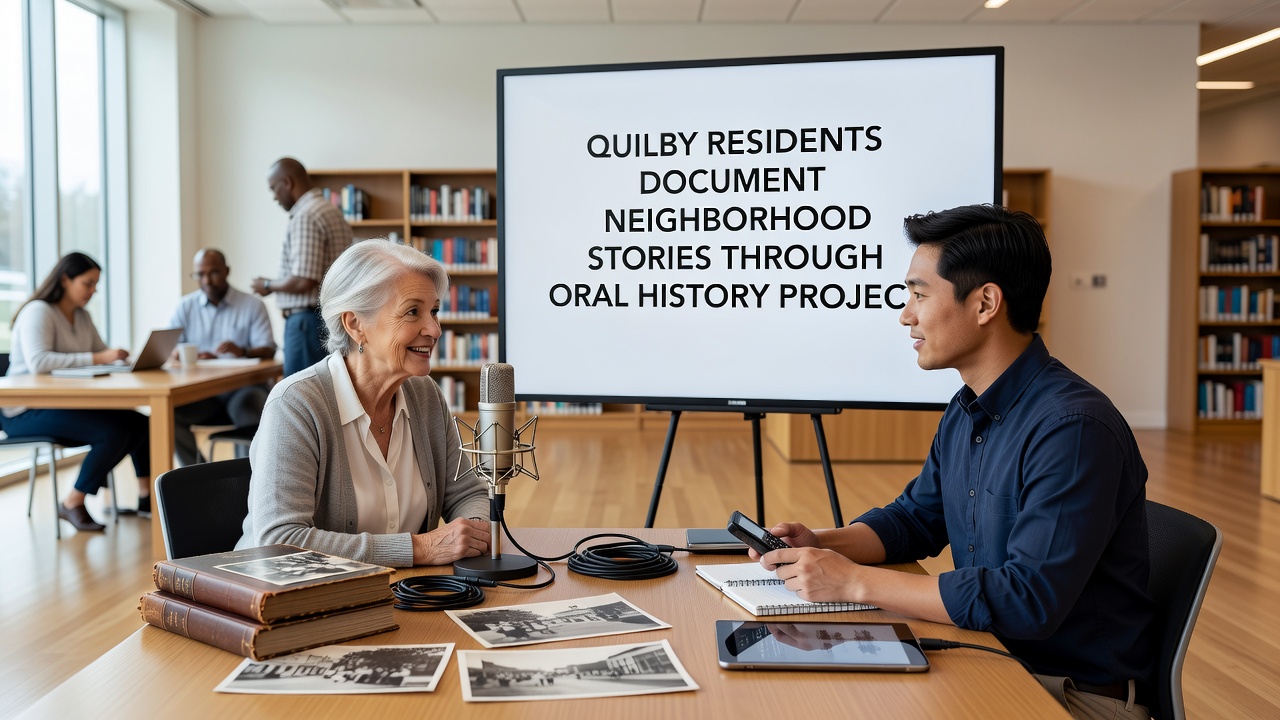
Participants receive training through workshops that cover interview techniques, equipment handling, and ethical guidelines for consent and privacy, while the process pairs each volunteer with a recorder and a note-taker who document names, dates, and locations mentioned during sessions. Recordings occur in quiet settings that residents choose themselves, and interviewers follow open-ended question guides that allow stories to unfold naturally yet still cover topics such as changes in local businesses, family migrations, and responses to past floods or infrastructure projects. Transcripts undergo review by participants before they enter the digital collection, which uses standardized metadata tags that facilitate searches by decade, neighborhood, or theme.
Data from the first year shows more than 180 interviews completed across six neighborhoods, and the archive now holds over 250 hours of audio that researchers and residents can access through the Quilby public library portal. Equipment includes portable digital recorders adn external microphones supplied by the library, while software for editing and indexing comes from open-source tools that keep costs low and allow community members to contribute to ongoing maintenance.
Neighborhood Coverage and Story Themes
Riverside interviews often focus on the evolution of the riverfront from industrial use to recreational space, and residents describe specific events such as the 1978 levee reinforcement and the gradual shift toward greenway trails that replaced older docking facilities. In Oakvale, stories highlight agricultural transitions and the impact of suburban expansion on former farmland, with accounts that include crop changes during the 1980s drought and the arrival of new community gardens in the early 2000s. Mill District participants recount factory work patterns, union activities, and the closure of major textile operations in the 1990s, while also noting how former workers adapted through retraining programs and small business startups.
Additional themes surface in cross-neighborhood comparisons, such as how transportation routes affected daily life before and after the 2012 transit expansion, and many recordings reference school consolidations or the introduction of community policing models in the 2010s. The project deliberately seeks voices from different age groups, so interviews include both long-term residents who remember pre-digital eras and younger adults who describe recent shifts in housing affordability and remote work patterns that emerged after 2020.
Public Access and October 2026 Milestone
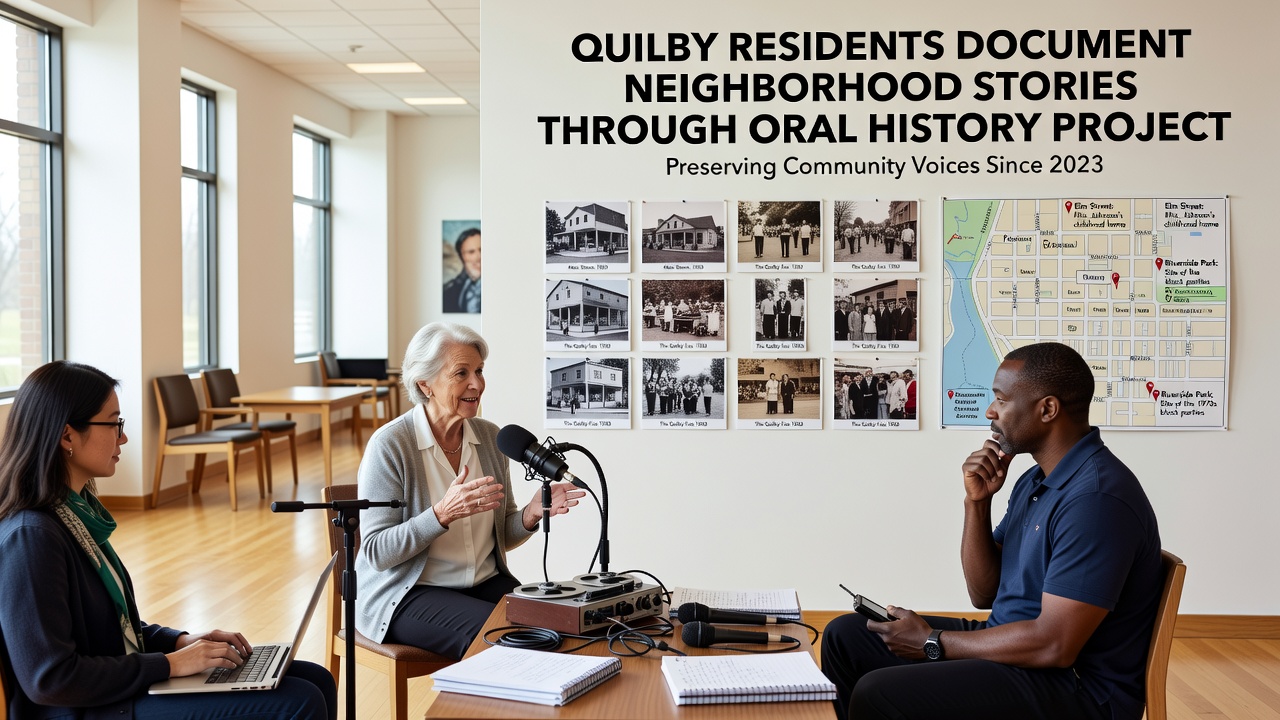
The archive supports public listening sessions held quarterly at the library, and October 2026 marks the planned release of an interactive map that links audio clips to specific addresses and landmarks within Quilby. Organizers coordinate with the town planning department to ensure the map aligns with existing geographic information systems, which allows users to explore stories alongside current zoning data and historical photographs already held by the library. A community listening event scheduled for mid-October 2026 will feature selected excerpts played in neighborhood venues, followed by facilitated discussions that invite additional residents to contribute new recordings on the same evening.
Partnerships with nearby universities provide occasional student interns who assist with indexing, and the project references methodological standards outlined by the Library of Congress National Recording Preservation Board for audio file formats and long-term storage practices. Another connection exists with the Oral History Association of Australia, whose guidelines on consent forms and community ownership influenced Quilby procedures for handling sensitive family information.
Archive Growth and Future Steps
Funding for the project comes from a combination of library allocations and small grants from regional heritage foundations, while volunteer coordination relies on a rotating committee that meets monthly to review progress and adjust outreach strategies. Expansion plans for 2027 include Spanish-language interviews to reflect demographic changes in the newer Westridge subdivision, and organizers have begun recruiting bilingual volunteers who can conduct sessions without translation delays. The digital collection undergoes regular backups to cloud servers located in multiple regions, which reduces risk of data loss while maintaining accessibility for researchers studying regional migration patterns.
Conclusion
The oral history project continues to add recordings each month, and its structured approach ensures that neighborhood stories remain available for future generations while supporting current community planning discussions. Residents who have participated report that the process often reveals connections between seemingly separate areas of Quilby, and the archive serves as a living record that grows through ongoing contributions rather than a static endpoint. Continued coordination among volunteers, the library, and partner institutions positions the effort to expand its reach while preserving the details that written documents alone cannot convey.